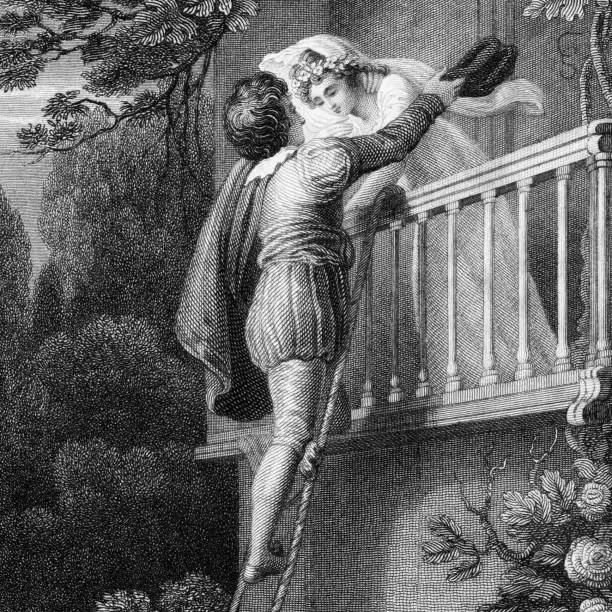
Writer’s Note: It is highly recommended that you have read or watched the play Romeo and Juliet by William Shakespeare before reading this article. If not, here is a simple summary of what you should know to better understand the contents of this article: Juliet is offered a plan by a Friar to reunite with Romeo: she is to consume a potion that places her in a death-like state, ultimately allowing her to escape her family without conflict. Romeo, having been notified of Juliet’s temporary state of death, will meet Juliet at the graveyard, and they will escape together. Romeo, however, is never notified, causing him to discover Juliet’s passing from another and rush to see her, only to commit suicide at the sight of her body. Juliet wakes up a few moments afterward, sees Romeo’s dead body, and proceeds to kill herself as well.
A man, prone to tardiness, misses a simple gathering amongst friends. In his haze, he is late to call his father. Later that day, the call he gets from his father’s number is not from the owner of the phone, but from a stranger feigning remorse, explaining his father’s death a few hours earlier. This scenario is purely hypothetical but demonstrates a key idea: while dilatoriness is considered ill-mannered, the dire consequences it can result in are often overlooked. In his play Romeo and Juliet, William Shakespeare seems to understand this, introducing a theme that discusses not only the problems that arise from tardiness but also the complications of punctuality. Therefore, Shakespeare’s utilization of dramatic irony, Balthazar’s speedy arrival, and the Friar’s prolongation in the play Romeo and Juliet make it conceivable that poor timing results in tragedy.
First, the utilization of dramatic irony provides the reader with an understanding of why delay or poor timing leads to tragedy. Near the play’s ending, Juliet Capulet threatens to commit suicide, forcing Friar Lawrence to create a hasty plan: “‘Give consent / To marry Paris … / Tomorrow night look that thou lie alone … / take thou this vial, being then in bed / … Thou shall be borne to some kindred vault / … Shall Romeo by our letter know our drift’” (4.1.90 – 92, 94, 113, and 115). The plan ordains Juliet to pretend to have died, allowing her to be transferred to the graveyard for her funeral; Romeo Montague will then arrive, having been notified by the Friar’s letters, rescuing her and escaping. The letter is described as playing a significant role, as it is responsible for preventing misunderstanding and reuniting the lovers. Of course, the letters fail to be delivered due to mistiming, inevitably leading to Romeo’s misfortune, as he muses, “‘Well, Juliet, I will lie with thee tonight / … An if a man did need a poison now’” (1.5.36 and 52). Romeo, devastated by Juliet’s passing, buys a vial, which he deliberately wields to poison himself. The reader, however, is aware of Juliet’s false passing and that if Romeo had received the letter, he would have known as well, exemplifying dramatic irony: the reader knows what Romeo does not. Therefore, Shakespeare utilizes dramatic irony to demonstrate the severity of the consequences resulting from the letter’s delay and allows the reader to visualize what could have been if the events had gone to plan.
Additionally, Balthazar, having seen Juliet’s funeral and misunderstood, attempts to notify Romeo too quickly, becoming a significant factor in the inevitable tragedy of Romeo’s death. In the play, Friar John is sent to deliver the letter; however, as demonstrated by the conversation between him and Friar Lawrence, he fails, as he replies, “‘I could not send it …’” (5.2.13). The Friar is unable to send the letter, as he offtracks to find a “brother” and stays too long in the area. Because of this mistiming, the Friar is accused of having the plague and confined to quarantine. Simultaneously, another conversation occurs: Balthazar, a few minutes too quick, arrives at Romeo’s location, recalling the following news: “‘Her body sleeps in Capel’s monument / And her immortal part with angels lives’” (5.1.18 and 19). Balthazar, unaware of the plan, rushes to Romeo, proclaiming Juliet’s death. This early arrival allows Romeo a decent head start to Juliet’s tomb, leading to Romeo’s untimely death and discovery just after. In fact, Romeo’s advance is likely the main reason Romeo reaches the tomb just on the verge of Juliet’s waking, as, if Balthazar had not arrived so quickly, Romeo would have arrived when Juliet was conscious. Thus, Shakespeare demonstrates that punctuality can also be categorized as poor timing, contributing to tragedy.
Lastly, Friar Lawrence’s tardiness is the main reason behind Balthazar’s celerity being problematic. When Friar John is unable to deliver the letter, Lawrence improvises: “‘Now must I to the monument alone; / Within three hours will fair Juliet wake’” (5.2.24 and 25). In the play’s previous scene, Romeo is shown to have left expeditiously to reach Juliet. The Friar, however, has only just left and is not as panicked as Romeo. This inescapably results in the Friar arriving at Romeo’s corpse: “‘Romeo! O, pale! Who else? What, Paris too’” (5.3.149). Friar Lawrence’s belatedness not only causes him to stumble upon dead Romeo but also dead Paris. If he had come sooner, he might have been able to save multiple lives. However, while the Friar could have prevented these deaths, it is also important to note that the Friar’s carelessness is not the only reason for the tragic scene before him. Too much had gone awry before the Friar arrived. Therefore, Shakespeare shows that tardiness displays not only ill manners but is also responsible for lamentable events.
Time is not just numbers on a clock, nor the ringing of an alarm clock to wake one up. Shakespeare demonstrates this through his inclusion of the chaos caused not just by lateness but by being early too. Time is an entity with the capability to cause discord in seconds, even tarnish fate itself.


Be First to Comment